
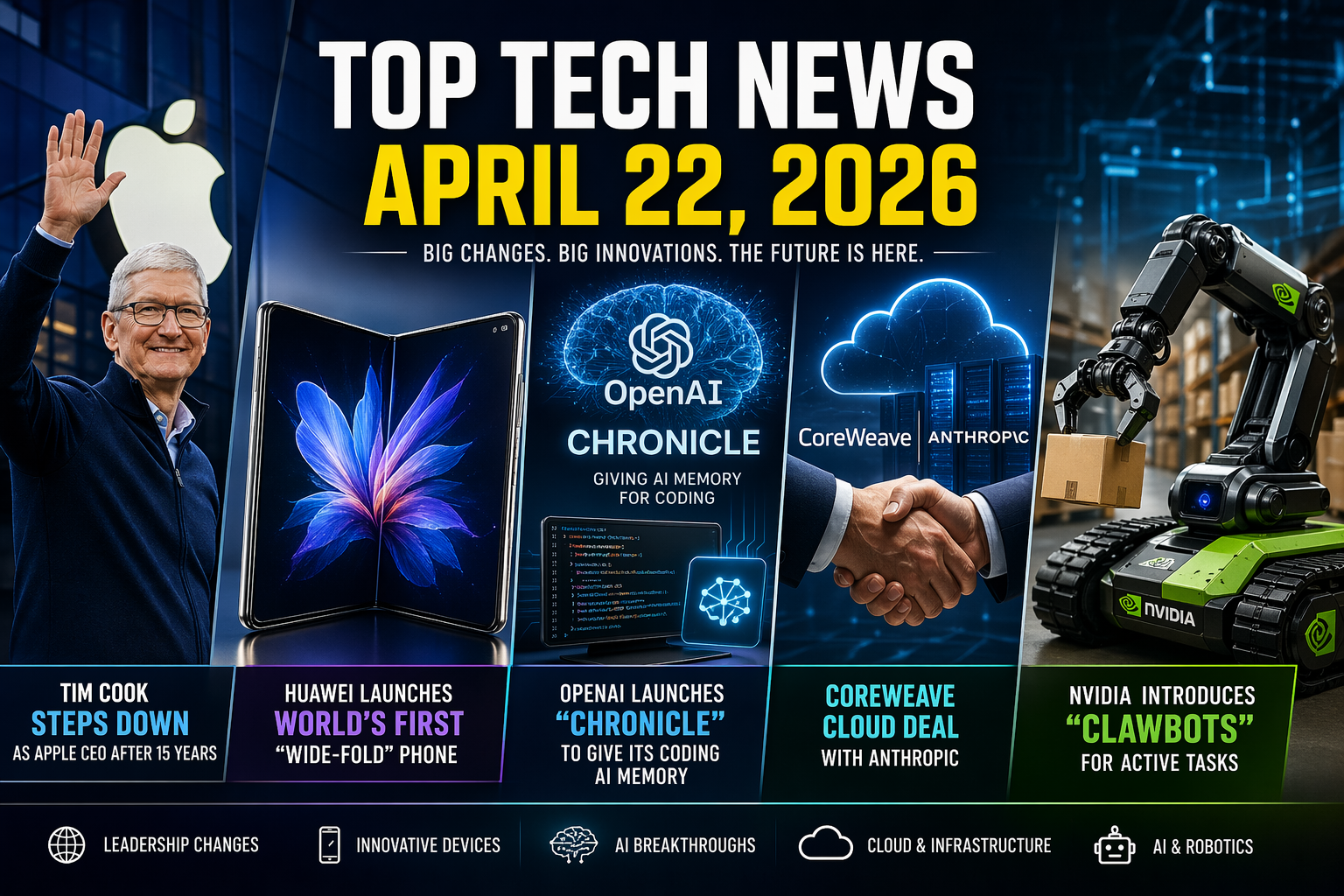
Top Tech News April 2026: Apple Leadership Change, Huawei’s New Foldable Phone, and Major AI Breakthroughs
The technology world never stands still. Every single day, new innovations, leadership decisions, and artificial intelligence developments reshape how we live, work, and communicate. As of April 22, 2026, the tech industry has delivered several major headlines that are already influencing the future of smartphones, cloud computing, and AI-powered tools.
From a historic leadership shift at Apple to a revolutionary new foldable phone by Huawei and powerful advancements in artificial intelligence, this week has been packed with game-changing updates. These developments are not just important for tech companies—they affect businesses, students, developers, and everyday users around the world.
1. A Historic Moment:
Tim Cook Steps Down as Apple CEO After 15 Years
One of the biggest stories in the technology world right now is the announcement that Tim Cook is stepping down as CEO of Apple after leading the company for nearly 15 years. This decision marks the end of one of the most successful leadership eras in modern technology history.
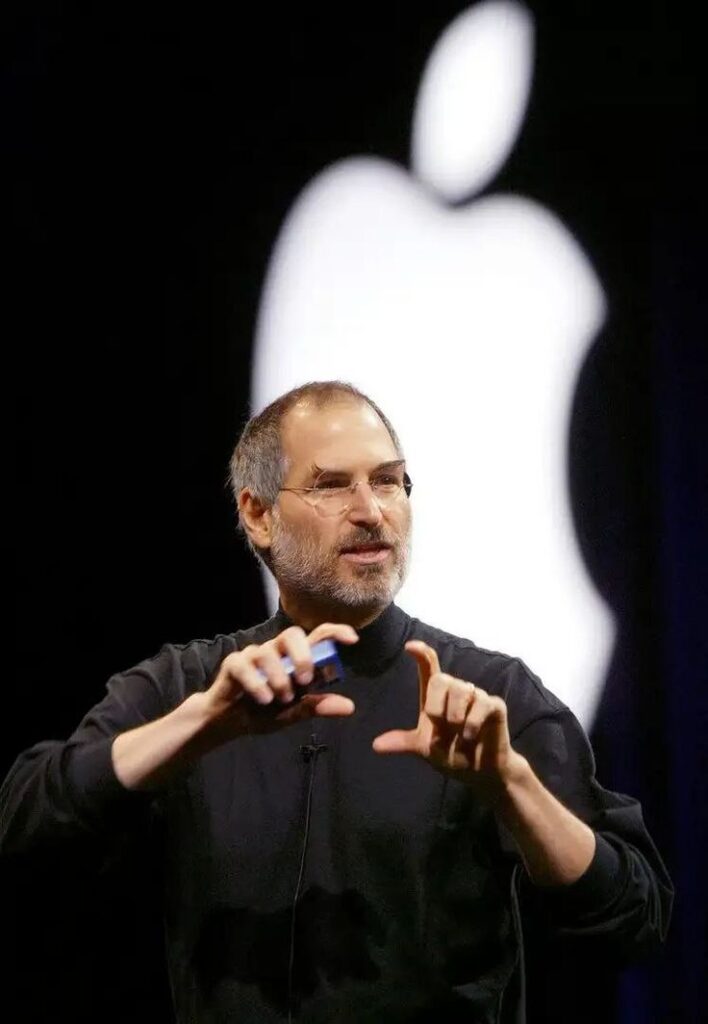
When Tim Cook took over as CEO in 2011, many people wondered whether he could continue the legacy of Apple’s visionary founder, Steve Jobs. Over the years, Cook proved himself as a steady and strategic leader who transformed Apple into one of the most valuable companies in the world.
Under his leadership, Apple expanded its ecosystem far beyond the iPhone. The company introduced popular products like smartwatches, wireless earbuds, and subscription-based digital services. Apple also strengthened its presence in global markets and focused heavily on privacy and security.
Now, as he prepares to step down from the CEO role, Cook will move into a new position as Executive Chairman. This transition ensures that his experience and leadership will still guide the company while allowing new leadership to take Apple into the next phase of innovation.
The new CEO is expected to focus heavily on artificial intelligence, next-generation hardware, and advanced computing technologies. These areas are becoming increasingly important as competition in the tech industry continues to grow.
This leadership change is not just a routine corporate decision—it signals a shift toward the future of AI-driven products and services.
.


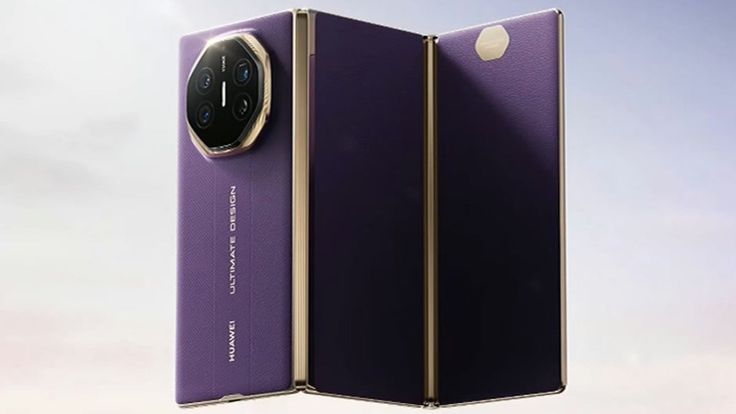
2. Huawei Introduces the World’s First “Wide-Fold” Smartphone
Another major headline in April 2026 comes from the smartphone industry. Huawei has launched what it calls the world’s first “wide-fold” smartphone, a device designed to push the boundaries of mobile technology and user experience.
Foldable phones have been around for several years, but Huawei’s new design introduces a fresh concept. Instead of simply folding in half like a book, the wide-fold phone provides a broader display that feels more like a tablet when opened. This allows users to multitask more easily, watch videos on a larger screen, and enjoy a more immersive digital experience.
The device also focuses on durability and performance. One of the biggest concerns with foldable phones has always been long-term reliability. Huawei claims that its new hinge system and screen technology are built to handle thousands of folds without damage.
For users, this means:
- Better multitasking
- Larger screen space
- Improved productivity
- Enhanced entertainment experience
This launch shows that the smartphone industry is still evolving rapidly. Manufacturers are constantly experimenting with new designs to attract customers and stay ahead of competitors.
The wide-fold concept could become the next big trend in mobile technology, especially as people rely more on smartphones for work, communication, and entertainment.






3. OpenAI Launches “Chronicle” — A New Era of AI Memory
Artificial intelligence continues to grow at an incredible pace, and one of the most exciting developments this week is the launch of Chronicle, a new system designed to give coding AI tools memory.
In the past, many AI tools could only respond to instructions in the moment. They didn’t remember previous conversations or understand long-term project details. This often forced developers to repeat instructions again and again.
Chronicle changes that completely.
With memory capabilities, AI can now:
- Remember previous tasks
- Understand project history
- Track code changes
- Provide more accurate suggestions
This innovation makes AI tools feel more like real assistants instead of simple software programs. Developers can work faster, reduce errors, and focus on creativity rather than repetitive tasks.
For businesses, this technology can improve productivity and reduce operational costs. For individuals, it can make learning programming easier and more efficient.
In simple terms, AI is becoming smarter, more reliable, and more useful in everyday work.



4. CoreWeave and Anthropic Partner to Strengthen AI Infrastructure

Behind every powerful AI system is an equally powerful computing infrastructure. That’s why the partnership between CoreWeave and Anthropic is such an important development in the technology industry.
This collaboration focuses on cloud computing—one of the most critical components of modern artificial intelligence. Training advanced AI models requires massive processing power, large data storage systems, and high-speed networks.
By working together, CoreWeave and Anthropic aim to build stronger and more efficient cloud platforms capable of handling complex AI workloads.
This partnership highlights a growing trend in the tech industry:
AI is no longer just about software—it’s about infrastructure.
Companies are investing billions of dollars into data centers, graphics processing units, and cloud services to support the next generation of artificial intelligence applications.
For users, this means faster services, smarter applications, and more reliable digital tools.
5. Nvidia Introduces “Clawbots” — AI Robots That Perform Real-World Tasks
One of the most futuristic developments in April 2026 comes from Nvidia, a company known for its powerful graphics processing technology.
Nvidia has introduced a new generation of AI-powered robots called Clawbots. These machines are designed to perform physical tasks using advanced artificial intelligence systems.
Unlike traditional robots that follow fixed instructions, Clawbots can adapt to changing environments and make decisions based on real-time data.
They can:
- Pick up and move objects
- Sort packages in warehouses
- Assist in manufacturing processes
- Handle repetitive industrial tasks
This technology has the potential to transform industries such as logistics, retail, and manufacturing. Businesses can increase efficiency, reduce labor costs, and improve workplace safety by using AI-powered robots.
While robots may sound futuristic, they are quickly becoming a normal part of modern workplaces. Over the next decade, automation is expected to play a major role in shaping the global economy.
Why These Tech Developments Matter in 2026
The updates we’re seeing today are not random events—they are part of a larger transformation happening across the technology industry.
Three major trends are driving this change:
Artificial Intelligence
Automation
Advanced Hardware
These trends are influencing everything from smartphones and computers to transportation and healthcare.
For businesses, staying updated with technology trends is essential for growth and competitiveness. For individuals, understanding new technologies can help improve skills, career opportunities, and productivity.
Technology is no longer just a tool—it is becoming a core part of everyday life.
The Future of Technology: What to Expect Next
Looking ahead, experts believe that the next few years will bring even more exciting innovations. Some of the most likely developments include:
Smarter AI assistants
More advanced robotics
Faster cloud computing
Improved smartphone designs
Greater automation in workplaces
Companies around the world are racing to develop technologies that are faster, smarter, and more efficient. This competition is driving rapid progress and creating new opportunities for innovation.
The future of technology is not just about machines—it’s about improving human life.